
News · Jackson
Deer disease spread by biting flies hits Jackson County hard
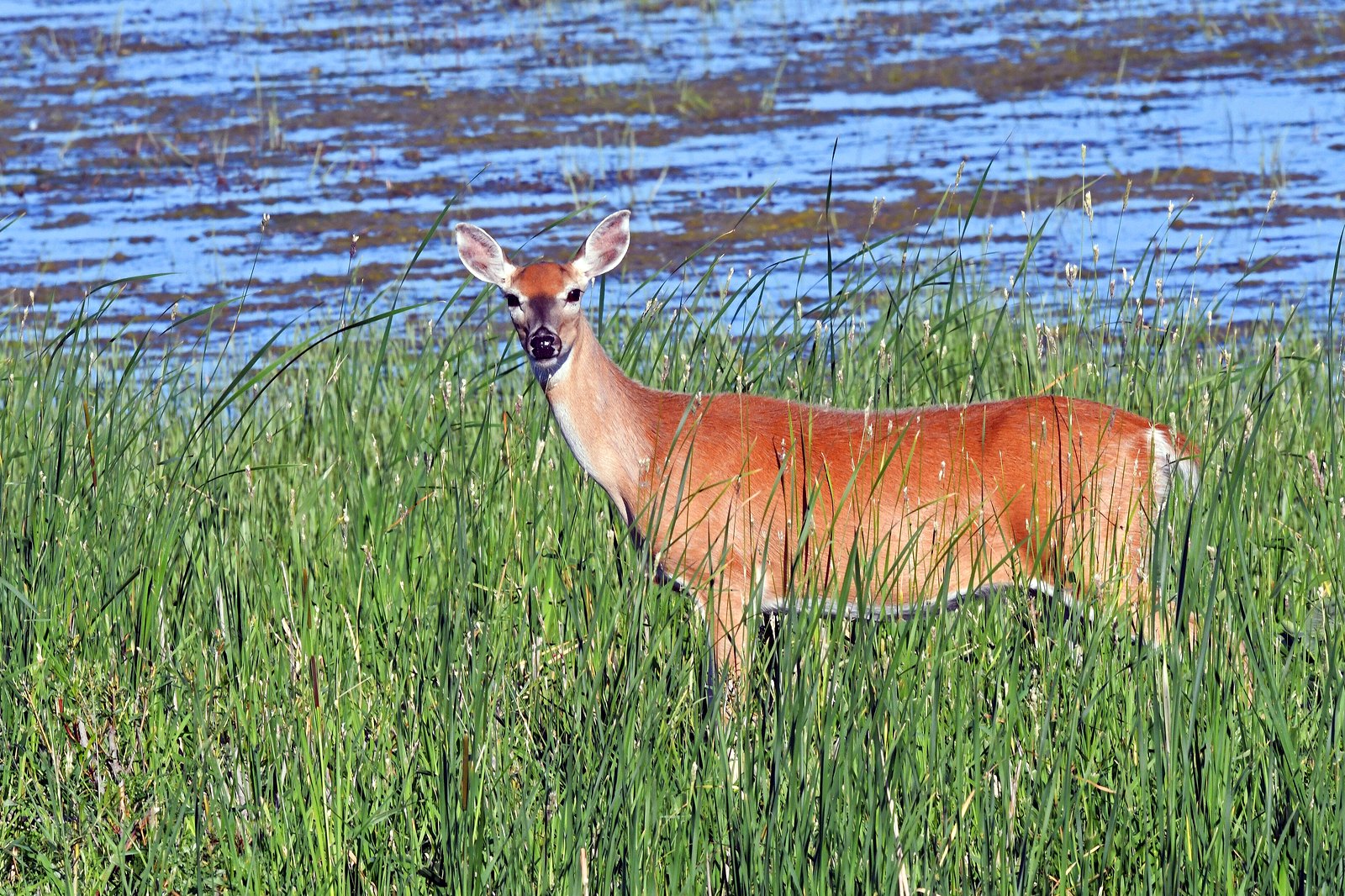
JACKSON — Epizootic hemorrhagic disease, a virus spread by biting midges, has wiped out entire deer herds in parts of Jackson County, hunters and observers told MLive in a report published Sunday.
The Michigan Department of Natural Resources confirmed the virus on Sept. 9 in free-ranging white-tailed deer from Branch, Ingham, Jackson and Lenawee counties, the state’s first detections of 2026. The DNR’s disease page now lists 12 counties with confirmed cases this year.
The DNR told Michigan News Source that about 300 deer deaths consistent with EHD were reported in August, most of them from Jackson County. The agency said September and October usually bring the most reports, and it expects the numbers to keep rising until freezing temperatures kill the midges.
Dr. Scott Larsen, a veterinarian with the DNR Wildlife Division, said in a statement that a warmer, wetter Michigan has made conditions more favorable for the virus and the midges, and that a new strain of the virus is challenging deer immunity, MLive reported.
Archery season opened Oct. 1, and hunters expect harvest numbers to be down this year because they are reluctant to reduce herds further, according to MLive.
The die-off has reached the water, too. Feverish deer often seek water to cool down, according to the DNR. The Grand River Environmental Action Team canceled its cleanup of the upper Grand River, usually held in September, because of dead deer in or near log jams and on several Jackson County lakes, MLive reported.
The DNR says EHD outbreaks “have not been shown to have a significant long-term effect on deer populations in Michigan,” although losses in a small area can persist for a few years.
There is no evidence that people, pets or other Michigan wildlife can contract the virus, and venison from affected areas is safe to eat, according to the DNR. Anyone who finds a deer they suspect died of EHD can report it through the DNR’s Eyes in the Field online system.
The DNR recorded more than 4,200 reported deer deaths from EHD in 2024 and more than 2,700 in 2025, according to Michigan News Source.
Sources:
MLive, “‘It is horrifying.’ Disease caused by flies has decimated deer herds in Jackson County,” Oct. 4, 2026, https://www.mlive.com/news/jackson/2026/10/it-is-horrifying-disease-caused-by-flies-has-decimated-deer-herds-in-jackson-county.html
Michigan DNR, “DNR confirms state’s first cases of EHD for 2026 in deer from four southern Michigan counties,” Sept. 9, 2026, https://www.michigan.gov/dnr/about/newsroom/releases/2026/09/09/dnr-confirms
Michigan DNR, “Epizootic hemorrhagic disease (EHD) in white-tailed deer”, https://www.michigan.gov/dnr/managing-resources/wildlife/wildlife-disease/wdm/ehd
Michigan News Source, “Michigan Deer Die-Off Raises Alarm,” September 2026, https://www.michigannewssource.com/2026/09/michigan-deer-die-off-raises-alarm/
Photo: Jim Hudgins, U.S. Fish and Wildlife Service, “White-tailed deer,” Wikimedia Commons, public domain, cropped and color-corrected, https://commons.wikimedia.org/wiki/File:White-tailed_deer_(53828388209).jpg
