
News · Troy
Half of Troy’s neighborhood streets rate poor in the city’s new road plan
TROY, Mich. — Half of the neighborhood streets Troy takes care of are in poor condition, according to the city’s new 2026 Transportation Asset Management Plan. The plan was in the packet for Monday’s City Council meeting, with a staff recommendation that the council accept it.
The numbers come from the Pavement Surface Evaluation and Rating scale, known as PASER, which Michigan’s Transportation Asset Management Council uses statewide. Roads get a score from 1 to 10. A road at 8 or higher counts as good, 5 to 7 is fair and 4 or lower is poor. The plan says Troy rates every one of its roads every year, using city staff and consultants.
On Troy’s local network, mostly residential side streets, the plan puts 13% of roads in good condition, 38% in fair condition and 50% in poor condition. The major network looks better: 21% good, 47% fair and 31% poor.
The plan also lists long-range targets. For local streets, Troy aims for 20% good, 60% fair and 20% poor, so it is trying to cut the poor share by more than half. For major roads, the target is 20% good, 40% fair and 40% poor. That is a bigger poor share than the city has now.
Troy maintains more than 339 centerline miles of road, the staff memo says. The plan’s budget table estimates about $12.5 million a year in road revenue, with almost 90% of it, about $11.2 million, coming from the state. It estimates spending at about $15.1 million, and roughly 78% of that goes to preservation and structural work instead of new capacity.
State law, Public Act 325 of 2018, requires the plan, and it has to be updated about every three years. Troy sent an uncertified copy to the state council on Sept. 29. The staff memo says certification is due before Oct. 30, and asks the council to let the city manager and chief financial officer sign off. The city had not posted minutes from Monday’s meeting as of Tuesday evening. The council meets next on Oct. 26.
Sources:
City of Troy, City Council agenda packet, Oct. 5, 2026, including the 2026 Transportation Asset Management Plan and memo, https://apps.troymi.gov/Meetings/Meetings/DownloadPDF/7316027
Michigan Transportation Asset Management Council, road condition dashboards (PASER ratings), https://www.mcgi.state.mi.us/mitrp/tamcDashboards
City of Troy, City Council meeting schedule, 2026, https://apps.troymi.gov/CouncilSchedule
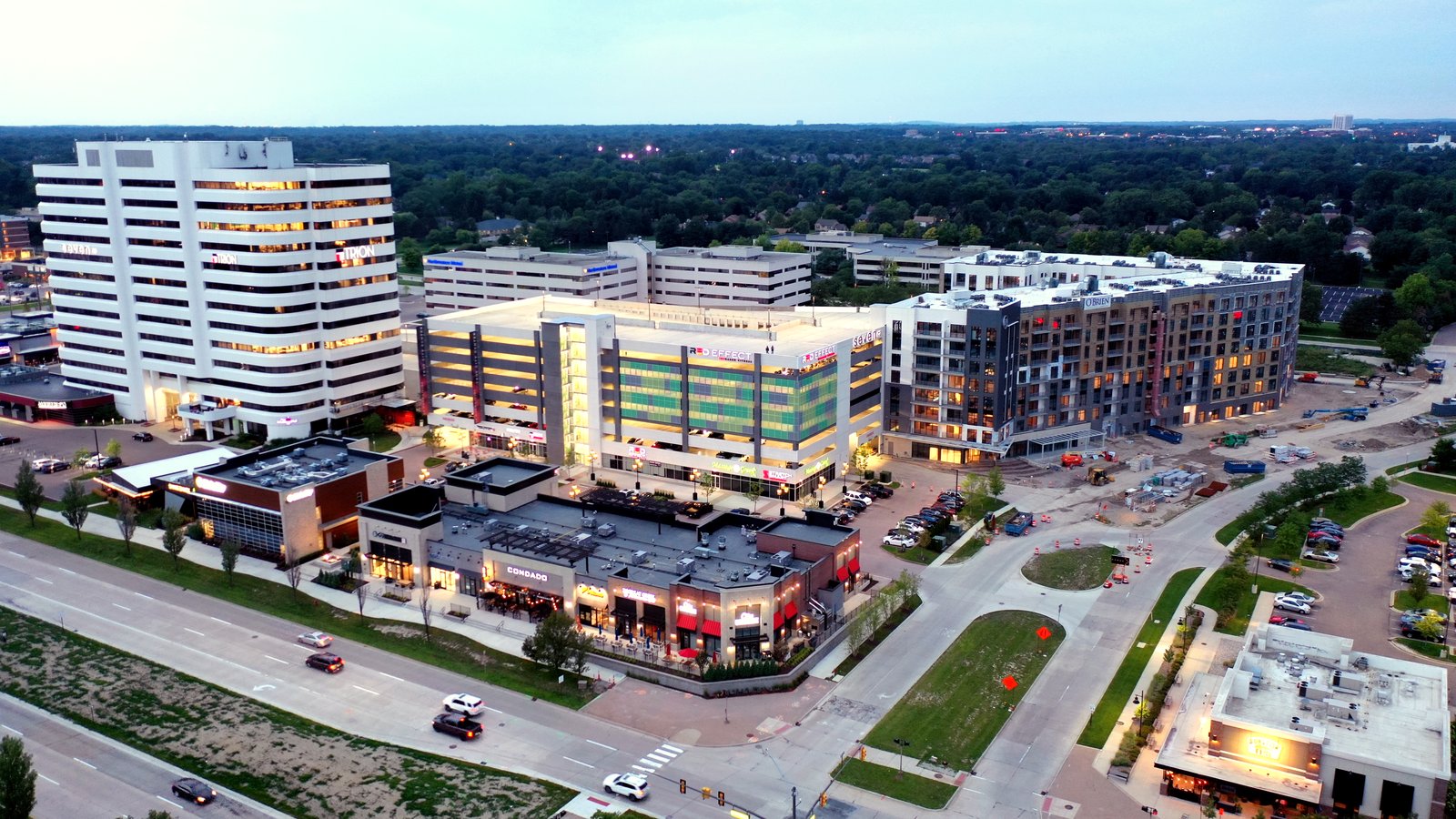
Photo: Lrgjr72, “888 W Big Beaver Rd (looking northwest),” July 22, 2021, Wikimedia Commons, CC BY-SA 4.0 (https://creativecommons.org/licenses/by-sa/4.0/), cropped and color-corrected; derivative under the same ShareAlike license, https://commons.wikimedia.org/wiki/File:888_W_Big_Beaver_Rd_(looking_northwest).jpg

More from Troy
Sports · October 6, 2026
Bloomfield Hills beats Troy 54-28; the Colts remain winless
Troy is 0-7 and 0-3 in the OAA White. Bloomfield Hills is 3-4.
Michigan Travel · October 6, 2026
Scarecrow Row circles Troy Historic Village through Nov. 4
The scarecrows stand outside the fence on Wattles and Livernois, free to see any time. The Village’s trick-or-treat is Oct. 23 and 24.
News · October 4, 2026
A downtown still being built
Troy is a city of corridors that has spent years trying to assemble a downtown.
Michigan Travel · October 4, 2026
Finding a center in a corridor city
A visitor can walk in Troy, but not on the road that looks most important.