
Election 2026 · Ann Arbor
Ann Arbor voters decide whether to keep paying $21 million a year in street and sidewalk taxes through 2032
ANN ARBOR, Mich. — Ann Arbor property owners will decide Nov. 3 whether to keep paying two city taxes for streets, bridges and sidewalks for another six years, at a combined first-year cost the city puts at about $21 million.
Neither question raises the tax rate. Proposal A would replace the current street, bridge and sidewalk repair levy of up to 2.125 mills, which runs out after 2026, with the same rate for 2027 through 2032. Proposal B would do the same for the separate 0.20-mill tax that pays to build sidewalks where none exist. A no vote on either would let that tax end after this year. The City Council voted May 4 to send both to the ballot.
Proposal A: street, bridge and sidewalk repair. The official ballot language estimates the levy would raise $19,236,316 in its first year. The city says the money pays for resurfacing and rebuilding streets and bridges, preventive maintenance, repairing and replacing existing sidewalks, crosswalks and curb ramps, and the city’s local match for federal road projects. Bike lanes and other “nonmotorized” facilities are also on the list of allowed uses.
Ann Arbor has had a voter-approved street tax since 1984. The city says the 2022–2026 levy brought in about $72 million and helped it land $13.4 million in state and federal money. Over that stretch the city says it resurfaced or rebuilt an average of 18 miles of street a year, replaced 6.25 miles of sidewalk and repaired 18,400 sidewalk slabs. Federally funded road projects typically split construction costs about 80% federal and 20% local, and the city says it can’t qualify without local matching money.
The sidewalk piece matters to homeowners. Before voters added a sidewalk share in 2011, owners had to pay to fix the sidewalk in front of their own property. Since then the city has handled those repairs outside the downtown district. The city notes City Code would have to be amended again to keep that arrangement for 2027 through 2032.
Proposal B: new sidewalks. The second question would raise an estimated $1,809,900 in its first year to build sidewalks in gaps around the city. Before voters first approved this tax in 2020, owners next to a gap were billed by special assessment. The city says about 6.8 miles of new sidewalk were built with the money from 2021 through 2025, with 1.85 more miles expected by the end of 2026. Developers would still have to build sidewalks at their own expense when a project requires them. If Proposal B fails, the city says the larger repair millage could also be used for some new sidewalks.
What it costs taxpayers. At the full rates, the two taxes together come to 2.325 mills, or $232.50 a year for each $100,000 of taxable value: $212.50 for Proposal A and $20 for Proposal B. The council’s memo puts Proposal A at about $317 a year for a property with the city’s average taxable value of $150,000. Taxable value is usually well below a home’s market value. Under state law, part of both levies can be captured by the Downtown Development Authority and the Washtenaw County Brownfield Redevelopment Authority, so not every dollar collected goes directly to city road and sidewalk work.
More on Ann Arbor’s ballot. City voters also see three charter questions. Proposal C would change how petition signatures are counted when a voter signs for more than one candidate for the same office, so the earliest-dated signature counts instead of tossing all of them. Proposal D would start elected officials’ terms at noon on the first Monday of the month after a city election. Proposal E would require the city to set up a municipal electric utility, a plan the council has backed a legal challenge against. In the mayor’s race, former state Rep. Yousef Rabhi beat Mayor Christopher Taylor in the August Democratic primary, and no Republican filed, so Rabhi is the only name on the November ballot. Statewide, every Michigan ballot carries Proposal 1 on a constitutional convention and Proposal 2 on utility and contractor donations.
Monday, Oct. 19, was the last day to register to vote online or by mail. After that, residents can still register in person at their city or township clerk’s office with proof of residency, through 8 p.m. on Election Day. Statewide early in-person voting runs Oct. 24 through Nov. 1. Absentee ballot applications are due by 5 p.m. Oct. 30 by mail or online, or by 4 p.m. Nov. 2 in person at the clerk’s office. Polls are open 7 a.m. to 8 p.m. on Tuesday, Nov. 3. County canvassers must finish by Nov. 17, and the Board of State Canvassers certifies statewide results by Nov. 23. Voters can check their registration and see their sample ballot at Michigan.gov/Vote.
Updated Oct. 20, 2026: The Oct. 19 deadline to register to vote online or by mail has passed, so the voting details now say so. Residents can still register in person at their city or township clerk’s office with proof of residency through 8 p.m. on Election Day.
Sources:
City of Ann Arbor, City Clerk, “Elections” (official Nov. 3, 2026 ballot language for Proposals A through E and the statewide proposals), https://www.a2gov.org/city-clerk/elections/
City of Ann Arbor, Engineering, “2026 Transportation Millages” (uses of each millage, 2022–2026 revenue and grants, miles resurfaced, sidewalk work, federal match, sidewalk responsibility and City Code note), https://www.a2gov.org/engineering/2026-street-bridge-and-sidewalk-millages/
City of Ann Arbor Legistar, File 26-0522, resolution to order election and ballot question for the 2027 Street, Bridge, and Sidewalk Millage (history since 1984, 2011 sidewalk change, $317 a year on $150,000 average taxable value), https://a2gov.legistar.com/LegislationDetail.aspx?GUID=C5441912-CCDF-42A3-942E-5822080D8F9F&ID=7990007
A2Council, “Ann Arbor City Council: May 4, 2026” (council approval of both ballot questions; new-sidewalk millage history), https://a2council.com/ann-arbor-city-council-may-4-2026/
Detroit Free Press, “Ann Arbor mayor election goes to Yousef Rabhi,” Aug. 5, 2026 (primary result; no Republican candidate), https://www.freep.com/story/news/politics/elections/2026/08/05/ann-arbor-mayor-race-yousef-rabhi-christopher-taylor/91172554007/
Michigan Department of State, “Absentee voting” and election calendar (registration, early voting and absentee deadlines), https://www.michigan.gov/sos/elections/voting/absentee-voting
Cost example: The Mitten Daily calculation from the ballot rates (mills × taxable value ÷ 1,000).
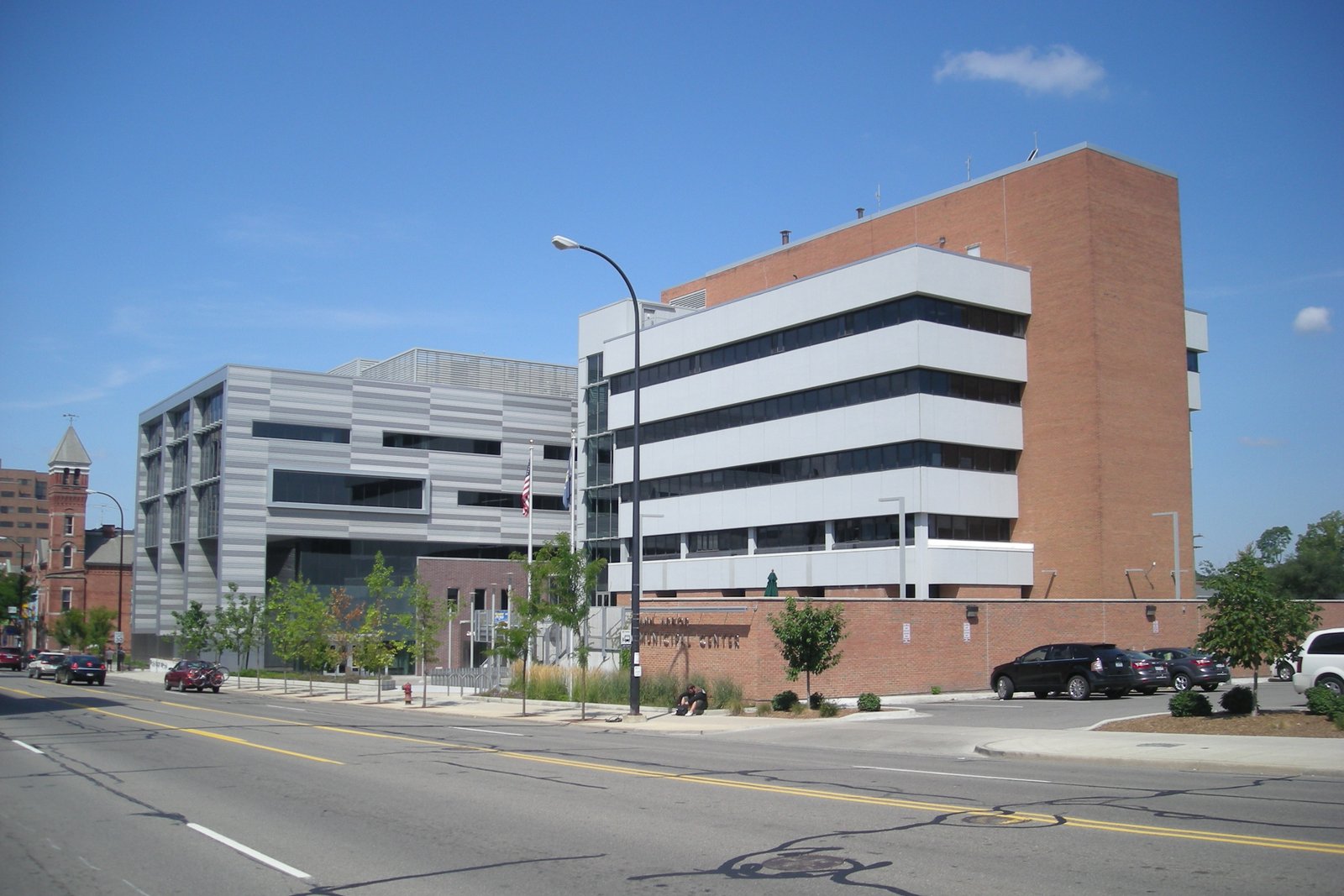
Photo: Michael Barera, “Ann Arbor August 2013 13 (City Hall),” August 2013, Wikimedia Commons, CC BY-SA 4.0 (https://creativecommons.org/licenses/by-sa/4.0/), cropped; derivative shared under the same license, https://commons.wikimedia.org/wiki/File:Ann_Arbor_August_2013_13_(City_Hall).jpg
