
Election 2026 · Lansing
Proposal 1 asks Michigan voters whether to call a convention to rewrite the state constitution
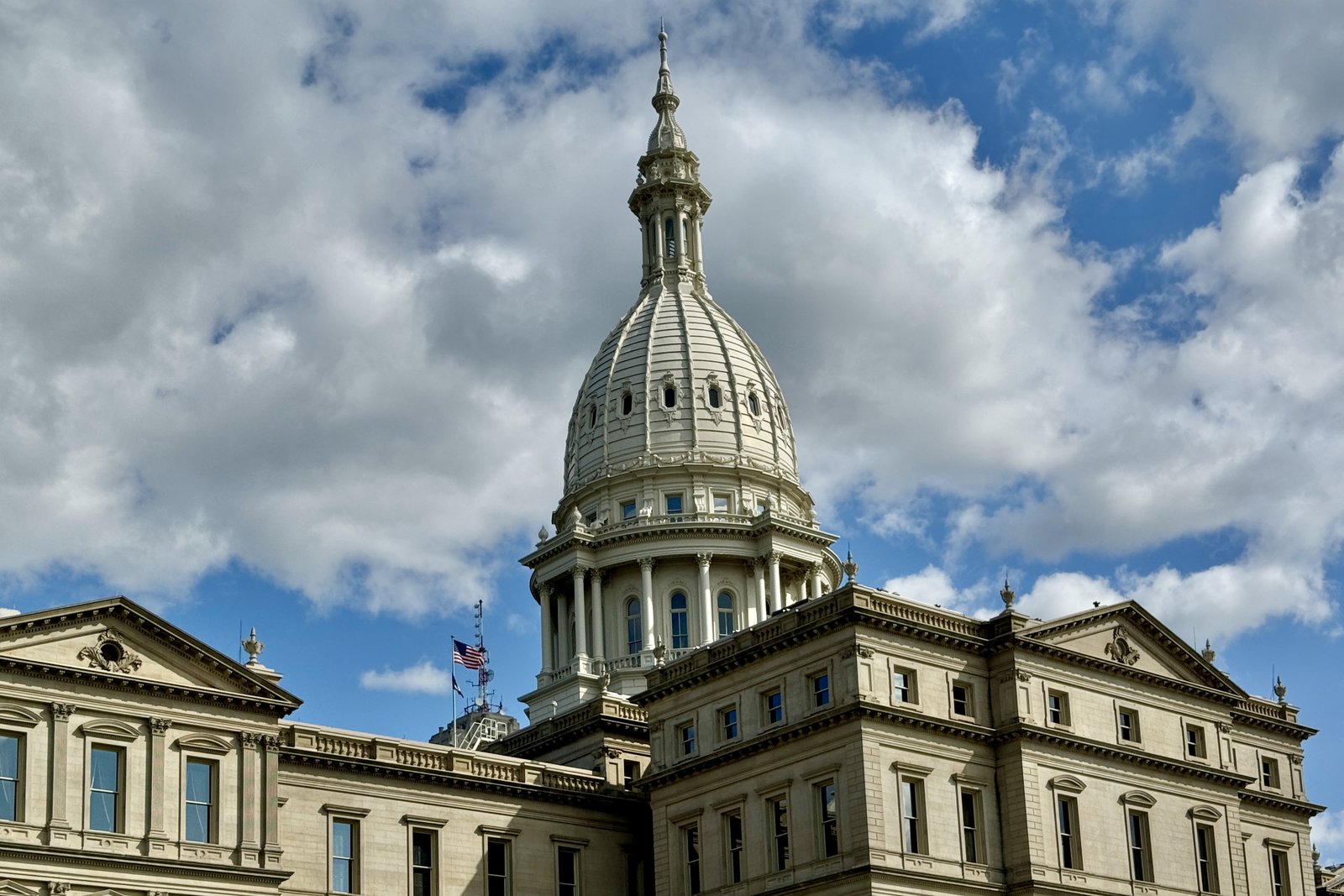
LANSING, Mich. — Every Michigan ballot on Nov. 3 opens its proposal section with a question the state constitution requires voters to answer every 16 years: should Michigan hold a convention to write a new constitution?
Proposal 2026-1 asks, in full, “Shall a convention of elected delegates be convened in 2027 to draft a general revision of the State Constitution for presentation to the state’s voters for their approval or rejection?” A yes vote starts that process. A no vote leaves the current constitution in place, and the question would return automatically in 2042.
Michigan last held a convention in 1961. It produced the Constitution of 1963, which has now been in effect for 63 years, the longest of the state’s four constitutions, according to a nonpartisan Senate Fiscal Agency overview of the proposal. Voters turned down the automatic convention question in 1978, 1994 and 2010, the agency said.
What would happen if it passes. The state would elect 148 delegates, one for each of the 38 state Senate districts and 110 state House districts. The fiscal agency said delegates likely would be chosen during regular 2027 election dates; if they were elected in August, the constitution would require them to convene in Lansing on the first Tuesday in October, which would be Oct. 5, 2027. Holding special elections instead would add cost.
The convention would set its own rules and budget. Whatever it drafts would not take effect on its own: the proposed constitution would go back to voters within 90 days after the convention adjourns, and if voters rejected it, the 1963 constitution would stay.
What it could cost. The fiscal agency said a 2027 convention is hard to price and offered several approaches. Inflating most of the 1961 convention’s expenses to today’s dollars, while keeping delegate pay at the levels set in a 1958 law, comes to about $10.2 million, or roughly $850,000 a month. Delegates would be paid $500 twice a month up to $7,500 each under that law, so delegate salaries alone could range from $148,000 to $1.1 million depending on how long the convention ran.
The arguments. The fiscal agency summarized positions from both sides. Opponents say the 1963 constitution has lasted because citizens can amend it by petition, and they worry special interests and lobbyists could steer delegates, reopen recently adopted amendments or create economic uncertainty, possibly at a cost to taxpayers with no change at the end. Supporters say the current document is too complicated or allows too little transparency, and they see a convention as a way to overhaul areas such as education funding and the budget process. Some supporters and opponents alike have noted a convention could be used to try to change recently adopted measures, including the 2022 reproductive rights amendment and the recreational marijuana law, the agency said.
Proposal 1 is one of two statewide questions. Proposal 2 would restrict campaign contributions from regulated utilities and large government contractors and expand political ad disclosure. The ballot also includes races for governor, U.S. Senate, Congress, the Legislature, the Michigan Supreme Court and the state education boards.
Monday, Oct. 19, was the last day to register to vote online or by mail. After that, residents can still register in person at their city or township clerk’s office with proof of residency, through 8 p.m. on Election Day. Statewide early in-person voting runs Oct. 24 through Nov. 1, and polls are open 7 a.m. to 8 p.m. on Tuesday, Nov. 3. Voters can check their registration and see their sample ballot at Michigan.gov/Vote.
Updated Oct. 20, 2026: The Oct. 19 deadline to register to vote online or by mail has passed, so the voting details now say so. Residents can still register in person at their city or township clerk’s office with proof of residency through 8 p.m. on Election Day.
Sources:
Michigan Senate Fiscal Agency, “November 2026 Ballot Proposal 26-1: An Overview” (ballot language, history, delegates, timeline, cost estimates, arguments for and against), https://www2.senate.michigan.gov/media/egnff5oq/proposal_mostrecent.pdf
WDIV-TV ClickOnDetroit, “What proposals are on Wayne County’s 2026 general election ballot? Here’s the list,” Oct. 16, 2026 (statewide proposal language), https://www.clickondetroit.com/news/local/2026/10/13/what-proposals-are-on-wayne-countys-2026-general-election-ballot-heres-the-list/
Michigan Department of State, “Absentee voting” and election calendar (registration, early voting and absentee deadlines), https://www.michigan.gov/sos/elections/voting/absentee-voting
Photo: w_lemay, “Dome, Michigan State Capitol, Capitol Avenue, Lansing, MI.jpg,” Wikimedia Commons, CC BY-SA 2.0 (https://creativecommons.org/licenses/by-sa/2.0/), cropped; derivative under the same license, https://commons.wikimedia.org/wiki/File:Dome,_Michigan_State_Capitol,_Capitol_Avenue,_Lansing,_MI.jpg

More from Lansing
Election 2026 · October 17, 2026
John James pitches an income tax cut and local say on data centers in his final debate with Jocelyn Benson
In Thursday’s final debate in Detroit, the Republican promised to cut Michigan’s 4.25% income tax “into the threes” and blamed eight years of Democratic control in Lansing. Benson, the Democrat, tied James to President Trump and touted a plan to lower health care costs.
Sports · October 17, 2026
Mid-Michigan, the Thumb and Blue Water Area: Week 8 football scores
Grand Ledge beat defending state champion DeWitt, Frankenmuth won a 15th straight TVC title, and Port Huron and Marine City reached 8-0. Verified Friday finals from Mid-Michigan, the Thumb and the Blue Water Area.
Election 2026 · October 17, 2026
Six candidates are on the ballot for two Michigan Supreme Court seats, but two of them could not take office if elected
Justices Megan Cavanagh and Noah Hood face judges Casandra Morse-Bills and Michael D. Warren Jr. The two U.S. Taxpayers Party nominees are not attorneys, which the constitution requires of justices.
Election 2026 · October 17, 2026
Proposal 2 would bar campaign donations from Michigan’s regulated utilities and large government contractors
The citizen-initiated law would also require donor disclosure for more political ads and “paid for by” lines online. Supporters call it a check on pay-to-play politics; opponents, including Consumers Energy, call it overly broad and likely unconstitutional.