
Election 2026 · Lansing
Six candidates are on the ballot for two Michigan Supreme Court seats, but two of them could not take office if elected
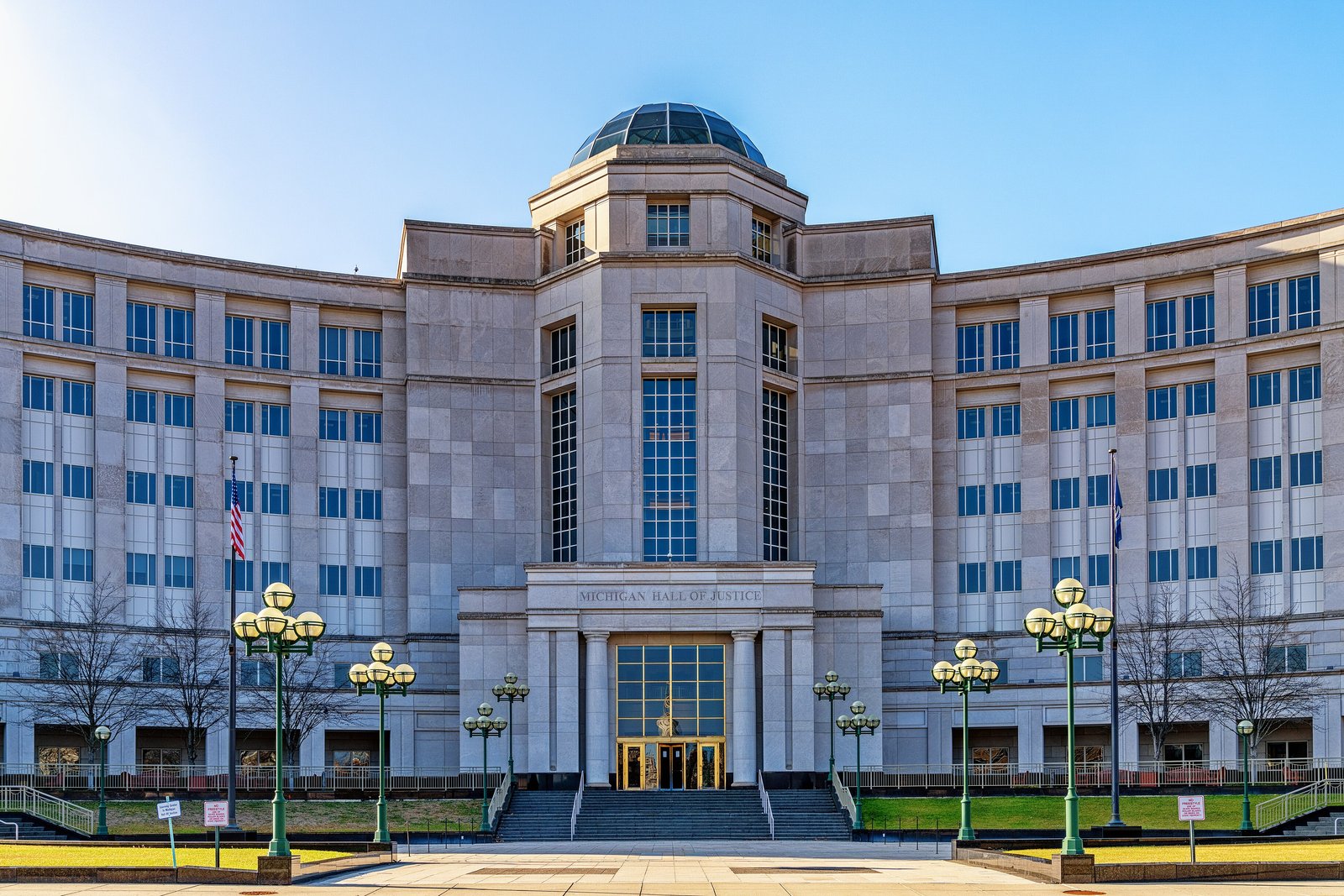
LANSING, Mich. — Michigan voters will fill two seats on the state Supreme Court on Nov. 3, choosing from six candidates in a race that appears in the nonpartisan section of the ballot. The two candidates with the most votes win eight-year terms.
Supreme Court candidates appear without party labels, but political parties nominate them at their conventions. This year’s nominees, according to Ballotpedia:
• Megan Cavanagh, a justice first elected in 2018, and Noah Hood, whom Gov. Gretchen Whitmer appointed in 2025 and who is seeking his first full term, were nominated by the Democratic Party.
• Casandra Morse-Bills, a judge of the 23rd Circuit Court, and Michael D. Warren Jr., a judge of the 6th Circuit Court in Oakland County, were nominated by the Republican Party.
• Thomas W. Howe and Jody White were nominated by the U.S. Taxpayers Party.
Democratic nominees hold a 6-1 majority on the court and have held a majority since 2020, Ballotpedia reported, so this election cannot flip control; if Republican nominees won both seats, they could not regain a majority until at least 2028. Ballotpedia listed endorsements from the Michigan AFL-CIO for Cavanagh and Hood and from the Michigan Chamber of Commerce for Morse-Bills and Warren.
Eligibility. Howe and White are not attorneys, Michigan Public reported Oct. 15. The Michigan Department of State told the station that a justice must be licensed to practice law in Michigan, admitted for at least five years, and under 70 at the time of election or appointment. The candidates can appear on the ballot because, under a 1997 attorney general opinion the department cited, the requirement must be met by the day a justice takes office.
White and Howe told Michigan Public they believe bar membership should not be required to serve. U.S. Taxpayers Party chair Donna Brandenburg said the party is challenging “the system.”
If either candidate won, University of Detroit Mercy law professor Aman McLeod told the station, he would expect a court challenge. If a court found the winner ineligible before he or she took office, McLeod said, the seat would go to the next-highest eligible vote-getter; if the person had already been sworn in, the governor would appoint a replacement.
Voters choose up to two candidates in the race. Other nonpartisan contests on many ballots include local judges, school boards and some city offices.
Monday, Oct. 19, was the last day to register to vote online or by mail. After that, residents can still register in person at their city or township clerk’s office with proof of residency, through 8 p.m. on Election Day. Statewide early in-person voting runs Oct. 24 through Nov. 1, and polls are open 7 a.m. to 8 p.m. on Tuesday, Nov. 3. Voters can check their registration and see their sample ballot at Michigan.gov/Vote.
Updated Oct. 20, 2026: The Oct. 19 deadline to register to vote online or by mail has passed, so the voting details now say so. Residents can still register in person at their city or township clerk’s office with proof of residency through 8 p.m. on Election Day.
Sources:
Ballotpedia News, “Six candidates compete for two Michigan Supreme Court seats in 2026,” Oct. 13, 2026 (nominees, backgrounds, court majority, endorsements), https://news.ballotpedia.org/2026/10/13/six-candidates-compete-for-two-michigan-supreme-court-seats-in-2026/
Michigan Public, “Two Michigan Supreme Court candidates aren’t eligible to serve. What if they win?” Oct. 15, 2026 (eligibility rules, Department of State statement, Howe, White, Brandenburg, McLeod), https://www.michiganpublic.org/politics-government/2026-10-15/two-michigan-supreme-court-candidates-arent-eligible-to-serve-what-if-they-win
Michigan Department of State, “Absentee voting” and election calendar (registration, early voting and absentee deadlines), https://www.michigan.gov/sos/elections/voting/absentee-voting
Photo: Tony Webster, “Michigan Hall of Justice - Michigan Supreme Court - Lansing.jpg,” Wikimedia Commons, CC BY 2.0 (https://creativecommons.org/licenses/by/2.0/), cropped, https://commons.wikimedia.org/wiki/File:Michigan_Hall_of_Justice_-_Michigan_Supreme_Court_-_Lansing.jpg

More from Lansing
Election 2026 · October 17, 2026
John James pitches an income tax cut and local say on data centers in his final debate with Jocelyn Benson
In Thursday’s final debate in Detroit, the Republican promised to cut Michigan’s 4.25% income tax “into the threes” and blamed eight years of Democratic control in Lansing. Benson, the Democrat, tied James to President Trump and touted a plan to lower health care costs.
Sports · October 17, 2026
Mid-Michigan, the Thumb and Blue Water Area: Week 8 football scores
Grand Ledge beat defending state champion DeWitt, Frankenmuth won a 15th straight TVC title, and Port Huron and Marine City reached 8-0. Verified Friday finals from Mid-Michigan, the Thumb and the Blue Water Area.
Election 2026 · October 17, 2026
Proposal 2 would bar campaign donations from Michigan’s regulated utilities and large government contractors
The citizen-initiated law would also require donor disclosure for more political ads and “paid for by” lines online. Supporters call it a check on pay-to-play politics; opponents, including Consumers Energy, call it overly broad and likely unconstitutional.
Election 2026 · October 17, 2026
Proposal 1 asks Michigan voters whether to call a convention to rewrite the state constitution
The question goes on the ballot automatically every 16 years and was rejected in 1978, 1994 and 2010. A yes vote would mean electing 148 delegates in 2027; the Senate Fiscal Agency puts one cost estimate at about $10.2 million.